Alliance receives a fillip
Originally published in Gulf Times on May 5, 2011
Regardless of the immediate agenda of civil society organisations (CSOs) around the world, the common thread of helping others is gaining momentum and helping put the concept of alliance of civilisations higher on the global agenda, participants said on the second day of pre-forum for the United Nations Alliance of Civilisations (UNAOC) yesterday.
Organised by the Qatar Committee for the Alliance of Civilisations, the Doha pre-forum was to serve as a precursor ahead of the 4th annual forum of the UNAOC, which is expected to take place in Qatar in December.
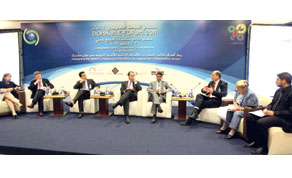
Speaking at a plenary session, “What’s next? Engaging civil society in the agenda for the 4th forum”, panel speakers pointed out that CSOs were now recognised as a fundamental part of policy-making, just as others urged real, on-the-ground actions.
First to speak was UNAOC Secretariat director Marc Scheuer, who said UNAOC wanted to continue working with CSOs and encouraged their involvement in shaping up the agenda.
“One of the things we are interested in is how to progressively identify targets and progressively measure them,” Scheuer said.
From Australia, Deakin University’ Migration & Intercultural Research chair, Prof Fethi Mansouri pointed out that not long ago CSO was a contested notion but things have changed – for the better.
“CSOs are now recognised as fundamental part of policy-making, including governmental, and it’s no longer acceptable to pay lip-service to civil society,” Prof Mansouri said, while warning though that the shift has created a vacuum.
“With the withdrawal of state in bridging cultures, the civil society has not been able to advocate or deliver and operate services,” he said.
On regional organisations, the academician said the newly-formed CSOs – “particularly those post-revolution” – continued to require tools, resources and access to like-minded organisations, where expertise can be shared.
“But we have instances where the regional governments are transferring the jobs to CSOs … as they give more value for money… the Alliance must really seize of this,” he said.
South Africa-based Educating for Reconciliation at the Institute for Justice and Reconciliation programme director, Fanie Du Toit said any relation between CSOs and UNAOC should be based on accountability.
“Relationships that are not accountable will not last. They are simply promiscuous. For that reason, accountability between UNAOC and CSOs is fundamental,” Toit said.
Another participant, Greg Ramm, director of Global Programmes for UK-based Save the Children also emphasised that the UNAOC was grappling with a course of direction, while urging that discussion be taken to the next level of real action.
“We have to move from ‘if’ and ‘how’ to real substance,” Ramm said while adding that the trick is to recognise that reduction of conflict will lead to development and development will lead to reduction in conflict.
The session was moderated by Dr Nazare Albuquerque and Taufiq Rahim.
Photocaption: Panellists discussing a point
As Published