Manager admits to illegal waste disposal
Originally published in Gulf Times on April 10, 2008
HAZARDOUS chemical waste is being disposed of illegally as toxic rubbish continues to pile up in Qatar.
Containers of potentially lethal chemicals based in Mesaieed Industrial City, including mercury chloride, potassium cyanide, nitric and resins, are nowhere to go because there is not a shortage of appropriate facilities. And Gulf Times has now learned that the lone incinerator operating in the country is not even authorised to burn the rubbish without prior approval.
“The whole country is stretched to the maximum and hundreds of companies contact me everyday about their chemical waste,” admitted the manager of a private firm.
“Sometimes I tell them to go and get approval from the authorities first - part of the regular process - sometimes I take it.”
“Companies are just so desperate to get rid of their waste. Approval usually takes three to four months and so, yes, I have sometimes processed 500gms or 200gms of the most poisonous and corrosive chemicals by circumventing the approval stage.
“People don’t realise that even the treatment and disposal of chemical waste has become a multi-billion riyal industry.”
Hazardous waste such as sealants, acids, oil, grease, and other chemicals, is being produced every day thanks to the breakneck pace of development around the country.
In January, a top environmental told Gulf Times that Qatar was facing a toxic ‘time bomb’ with debris from construction work mounting up, including chemicals like batteries, paints, lubricants and used oil filters.
He warned that mismanagement of hazardous waste, particularly improper disposal and accidental leaks, can pose numerous threats to the environment, such as ground or surface water pollution, air pollution, fire and explosions, poisoning via the food chain, and poisoning to human beings through direct contact.
Some of the effects of toxic and hazardous waste on human health include cancer, birth defects, reproductive anomalies, brain and kidney damage, and skin, lung, and heart diseases.
A QR100mn waste treatment plant based in Mesaieed Industrial City recently became operational, but only in Phase II of the project will an incinerator be installed.
In the meantime, the authorities have ordered firms to store their waste products until measures are in place to deal with them properly.
An official at the Supreme Council for the Environment and Natural Reserves (SCENR), the regulatory body for environment matters in Qatar, explained: “The waste treatment facility in Mesaieed Industrial City is up and running and should ease the backlog. Unfortunately, they don’t have the thermal oxidation, otherwise known as incineration process, to offer at the time.”
Anyone producing chemical waste has to contact SCENR to get approval for its appropriate disposal. And, in some cases, the firm operating the country’s only industrial hub has been granted permission to treat chemicals.
However, permission is not always sought - and the potentially hazardous ramifications for the staff operating Qatar’s only incinerator can only be guessed at.
An employee, speaking to Gulf Times on condition of anonymity, revealed: “When the waste does finally land at our site the way the process of incineration or ‘cooking’ is carried out is certainly hazardous and unprofessional.
“It is imperative that these products be handled, packaged, transported, and incinerated, only according to the highest levels of safety standards to ensure minimal personal and environmental impacts.
“It’s a fact that all chemicals are hazardous. Anyone handling them must follow certain guidelines, such as having to wear eye goggles, special gloves, masks and shoes and so on. What we have in our company is the good old ‘let’s go mining’ attitude, as if this is the 1800’s.”
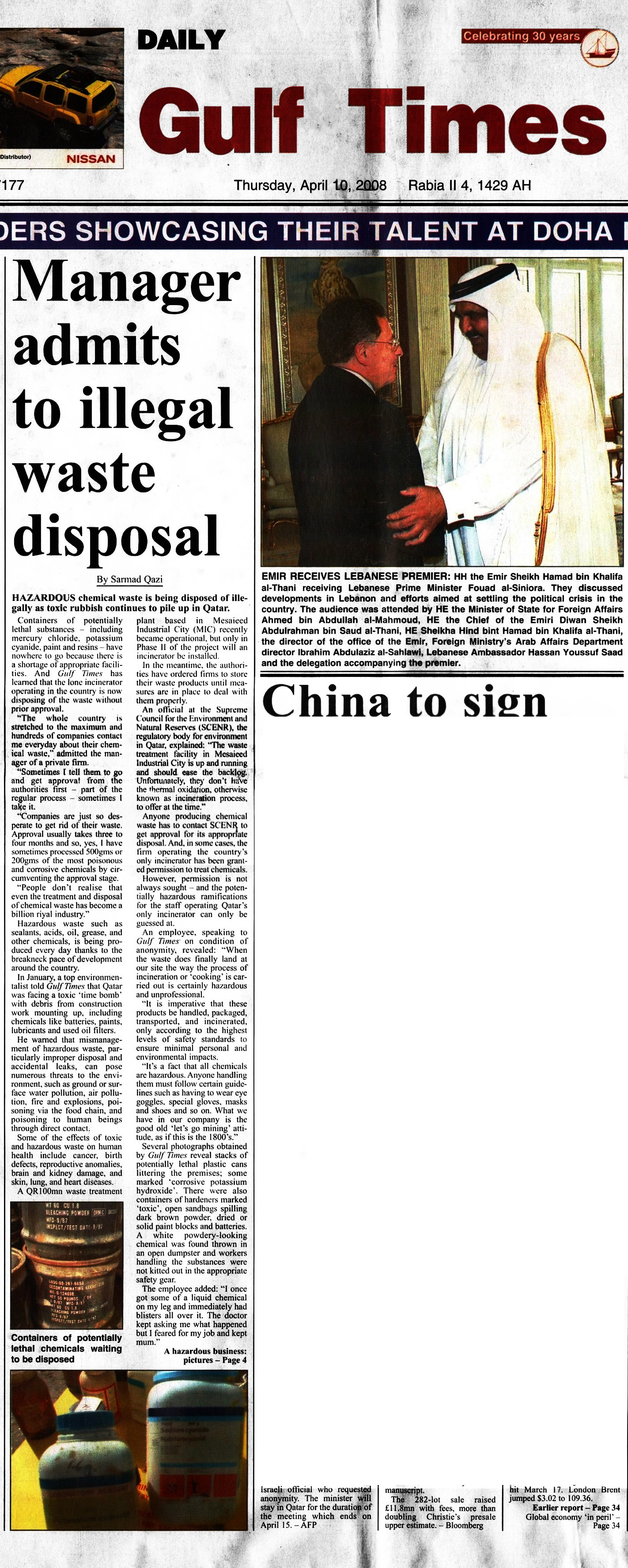
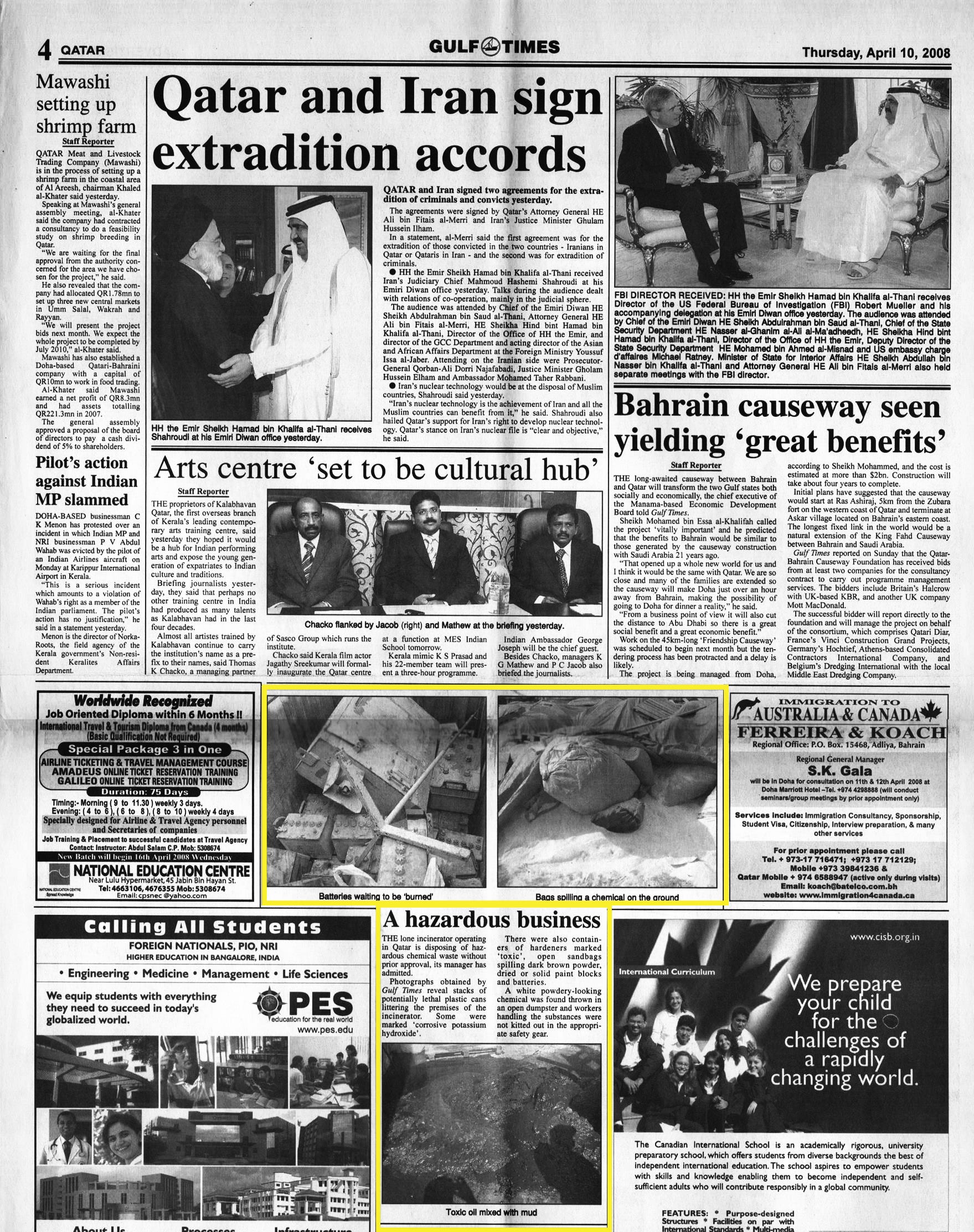
Several photographs obtained by Gulf Times reveal stacks of potentially lethal plastic cans littering the premises; some marked ‘corrosive potassium hydroxide’. There were also containers of hardeners marked “toxic”, open sandbags spilling dark brown powder, dried or solid paint blocks and batteries. A white powdery-looking chemical was found thrown in an open dumpster and workers handling the substances were not kitted out in the appropriate safety gear.
The employee added: “I once got some of a liquid chemical on my leg and immediately had blisters all over it. The doctor kept asking me what happened but I feared for my job and kept mum.”
A hazardous business: pictures - Page 4